

Short-form video has become a key way people discover content. For marketers, this creates an opportunity to get more value from the long-form content they already produce.
That’s where clipping comes in.
Clipping is the process of pulling short, compelling moments from longer-form content and turning them into standalone pieces for distribution across social and digital channels.
A webinar, podcast, interview, livestream or conference panel can contain dozens of moments worth sharing. Instead of publishing the full recording and moving on, marketers can find those moments and turn them into new content.
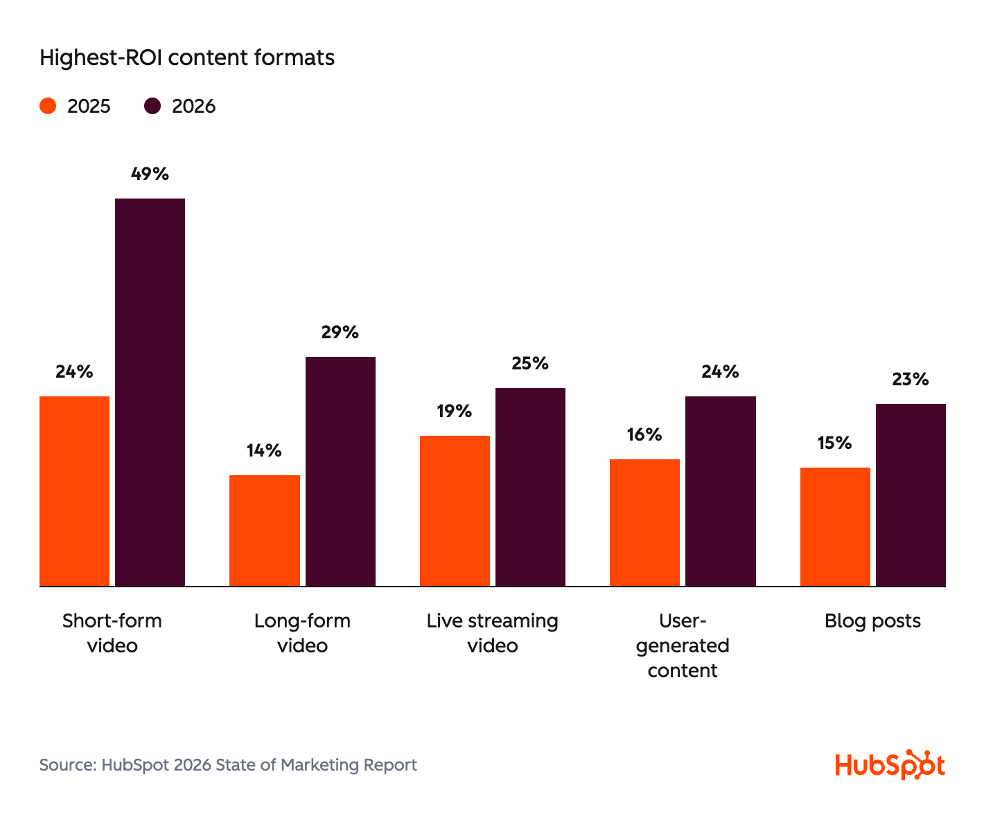
HubSpot’s 2026 State of Marketing found that 60% of marketers use short-form video, while 49% say it delivers the highest ROI of any content format. Thirty percent plan to increase their investment in short-form video this year.
As we covered in our article on content atomization, one strong piece of content can become multiple useful assets. Clipping applies that same idea to video, with another question to consider: how and where will each piece reach its audience?
Clipping Starts Before You Hit Record
Good clips start with good source material. The best clips have a clear idea, a strong opening and enough context to make sense on its own. It should be something worth watching, not just a random excerpt from a longer conversation.
Marketers should be designing content experiences with clipping in mind. That means thinking about potential clips before production even begins.
When planning a webinar, consider the questions that could produce strong soundbites. During an executive interview, look for opportunities to draw out a clear point of view. At an event, pay attention to conversations that could generate useful or unexpected moments.
The better the source material, the more opportunities you have to create something worth sharing.
How Long Should a Clip Be?
The rule of thumb: as short as possible while still delivering one complete, coherent idea.
In practice, optimal lengths vary by platform:
- TikTok, Instagram Reels & YouTube Shorts: 15–30 seconds. Tight and punchy.
- LinkedIn: up to 60–90 seconds. Professional audiences will watch a longer clip if the strategic takeaway is strong.
Never pad a video simply to hit an arbitrary length, and never edit so tightly that key context is lost. If an idea requires 45 seconds to land, give it 45 seconds.
Meet the Clippers
The rapid rise of short-form video has given birth to a new role in the creator ecosystem: clippers.
Clippers specialize in identifying high-potential moments within long-form footage, editing them into optimized vertical videos, and distributing them across social platforms.
Clipping marketplaces, like Vyro from Mr. Beast, have emerged where brands pay clippers for clips of their podcasts and product launches. Clippers receive automated payouts, typically around $3 per 1,000 views, based on the number of views their clips generate.
Marketers don’t need an army of third-party clippers to capture value. Your internal social team, video producer, or agency partner can easily execute this role. What matters is assigning clear ownership to someone tasked with mining your media library for valuable moments.
Start With the Content You Already Have
Start by looking through recent:
- Webinars
- Podcasts
- Executive interviews
- Customer conversations
- Conference sessions
- Product demos
Look for moments that answer a specific question, make a strong point, challenge an assumption, or tell a useful story.
The best clips can stand on their own while giving viewers a reason to explore the larger piece of content.
Then look at the results. Which topics get views? Which speakers get people to engage? Which clips drive traffic or conversation? That information can help shape the next round of clips.
Distribution is Half the Battle
Even the best video clip fails without a clear distribution plan.
LinkedIn, YouTube Shorts, Instagram and TikTok each have different audiences and viewing habits. The opening, captions, length, framing and call to action may need to change depending on where the clip appears.
A strong clip can also have more than one life. A video that performs well organically could become paid social content. A clip from an executive interview could support a related blog post or email. A customer clip could strengthen a sales presentation or landing page.
Thinking about distribution early helps marketers capture content that can work across multiple channels.
Adapt to How Audiences Consume Content
People are consuming more content in short, visual formats. Brands need to adapt to how audiences discover and engage with information today.
Clipping gives marketers a practical way to turn long-form content into short-form video that can reach people across more channels. It’s another way to make the most of content you’ve already created while meeting audiences where they are.
Tell Your Story helps brands develop, produce, and distribute human-first content that builds authority and drives growth. Contact us today to elevate your content engine.