

When we helped a B2B services client launch a LinkedIn newsletter this fall, nearly 49,000 people subscribed in the first week.
That kind of response shows the power of LinkedIn newsletters.
Unlike standard feed posts that live and die in a 24-to-48-hour window, newsletters cut through the noise by landing directly in their email inboxes.
Read why LinkedIn newsletters deserve a place in your content strategy and get practical tips for launching and managing one effectively.
Why a newsletter beats another week of posts
Newsletters offer distinct advantages that traditional posts simply cannot touch:
Skip the algorithm. Every feed post has to compete for space in a busy feed. A newsletter issue goes straight to your subscribers’ inbox. Those readers already raised their hand, so you start every issue with a built-in audience instead of just hoping for reach on the feed.
AI search is citing LinkedIn. LinkedIn is currently the number one most-cited domain for B2B AI searches. Articles account for roughly 60% of LinkedIn content citations by AI engines, compared to 40% for feed posts. Publishing deep-dive newsletters directly improves your brand’s discoverability across emerging AI-driven search tools.
Get more mileage from existing content. Research reports, webinars, client stories and executive talks all make good source material. A newsletter gives them a second life and a consistent home.
Stay visible longer. While a standard post peaks in a couple of days, a well-crafted newsletter drives visibility, shares, and engagement that can last for weeks.
How to run a LinkedIn newsletter people want to read
Launching a newsletter is fairly easy. Building one that readers recognize, value and continue to open takes planning and consistency. Here’s some tips and tricks.
Build an editorial calendar & repeatable workflow
A six-month editorial calendar helps you plan ahead instead of scrambling every month. Assign a theme to every issue, identify three or four supporting points and define what readers should take away after reading.
Then establish a workflow. Identify who will develop the ideas, draft the content, source supporting data, review the copy and publish the issue. Set deadlines for each step and build in time for approvals. A repeatable process makes publishing easier to sustain, especially when multiple stakeholders need to contribute.
Write about what youraudience cares about when they care about it
Don’t plan your editorial calendar in a vacuum. Time your issues to support active commercial moments, buying cycles or regulatory shifts. When your insights arrive right when decision makers are actively wrestling with those challenges, urgency converts to engagement.
Set guidelines for the format
- Set a consistent publishing schedule. Set a target publication date, such as the 15th of each month, and communicate that expectation internally. Consistency helps readers know when to look for new content and helps your team stay on track.
- Aim for 1,200 to 1,500 words. That’s long enough to say something meaningful and short enough to finish over coffee.
- Make it skimmable. Use headlines, subheadings and bullets. No walls of text.
- Mix in media. Native video, podcast clips, GIFs, pull quotes and stats break up the page and give skimmers a way in.
- Put calls to action throughout. Many readers may never reach the bottom, so don’t save your only link for the last line.
Measure and improve
Review performance within the first week of publication, then look at trends over several months. A simple monthly report, should include targets, such as:
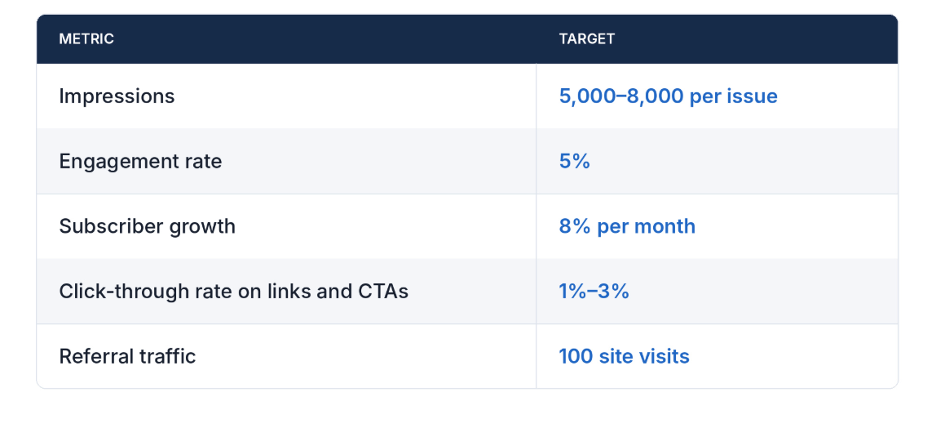
Most importantly, use the findings to make decisions. Reporting should lead to action, not just a monthly spreadsheet.
Turn your LinkedIn newsletter into a long-term asset
A successful LinkedIn newsletter has a clear editorial focus, delivers useful content consistently and gives readers a reason to return. It also requires a workflow that your team can sustain and a measurement plan that connects content performance to business priorities.
The opportunity is significant, as our client’s 49,000-subscriber launch proved. But the real win is turning that initial spike into a loyal audience that keeps coming back.
Want to make more of your content strategy? Tell Your Story can help you develop a sustainable editorial calendar and create content that reaches the right audience. Let’s talk.