

AI has upended how people search for, well, just about everything.
Two shifts are driving a new reality called Zero-Click Search. First, traditional search engines like Google and Bing now generate AI summaries directly at the top of results. Second, AI tools like ChatGPT and Gemini have become search destinations in their own right. Users ask, get an answer, and never click anywhere.
Today, about 60% of all searches end without a single click to a website (Search Engine Land).
If your business isn’t showing up in AI answers, you are losing visibility.
Why AI Might Be Skipping Your Brand
Showing up in AI answers depends on how clearly your business can be understood and pulled into those systems. But most websites were not built for this kind of search.
When AI scans your website, three things often get in the way:
- Unclear structure – If your website is hard to navigate or your titles are confusing, AI won’t trust your info. It needs a clear map to understand what you do.
- Vague content – Many websites use vague language that doesn’t directly answer anything. AI looks for specific, usable responses. If your content circles a topic rather than answering it, AI will pull a better answer from somewhere else.
- Weak outside signals – AI doesn’t just look at your website. It looks at reviews, news articles, and other sites to see if people trust you. If no one else is talking about you, the AI probably won’t either.
How to Become “The Answer”
To show up in Zero-Click Search, your content needs to be:
- Clear enough to quote
- Structured enough to scan
- Trusted enough to include
The basics like site speed and mobile optimization still matter too. In fact, they are the baseline signals that tell an AI your content is technically reliable.
To show up in AI answers, focus on the following:
- Answer real questions: Write content that answers real-world questions without the fluff. Gather 10–15 questions from sales calls, emails, or support tickets, then create content that answers those questions directly.
- Make your content easy to extract: AI favors content that is simple to scan and understand. Use headers that match how people actually search and break up long paragraphs into bullets and table. Add schema markup, a code added to a website’s HTML that helps search engines and AI tools understand what understand your content better.
- Build trust beyond your website: AI validates what you say by checking other sources. Ensure your business information is reflected consistently across the entire web (e.g. Google Business profile). List your business in a few relevant directories, ask for new customer reviews and get mentioned in an industry article or partner site.
- Keep your content fresh: AI tends to favor content that is regularly updated. A page that hasn’t been touched in years sends a signal of neglect. Even small updates, like adding a new question, refreshing a statistic, or expanding a section, can help maintain your relevance over time.
- Use video: AI tools are increasingly pulling answers from video, especially YouTube. On your video content, make sure your titles and descriptions are written the way people actually ask questions. Transcripts also matter. AI can read them, so a video becomes another piece of content it can pull from.
Are You Part of the Answer?
Before you fix anything, see where you stand. An AI Visibility Audit can show you where you appear, where you don’t, and what is getting in the way.
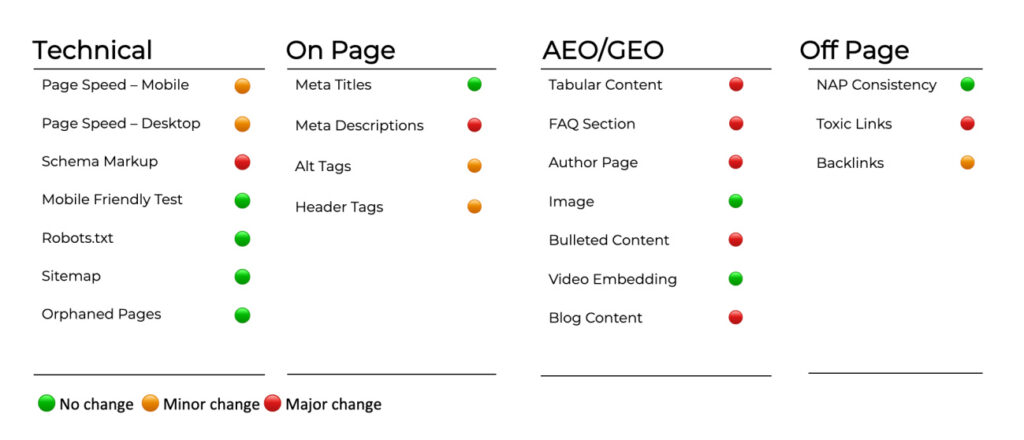
Get a Free AI Visibility Audit
Tell Your Story will review how often you appear in tools like ChatGPT and Gemini, and what is blocking you from being included in answers.
People are asking AI questions your business was built to answer. The real question is: are you showing up?