

The strongest ROI in influencer marketing isn’t coming from celebrities with seven-figure follower counts. It’s with micro-influencers — creators with smaller, highly engaged audiences. And they cost a lot less than you’d think.
Most brands start influencer searches by looking at follower count. That’s the wrong place to start.
Tiers of influencer marketing
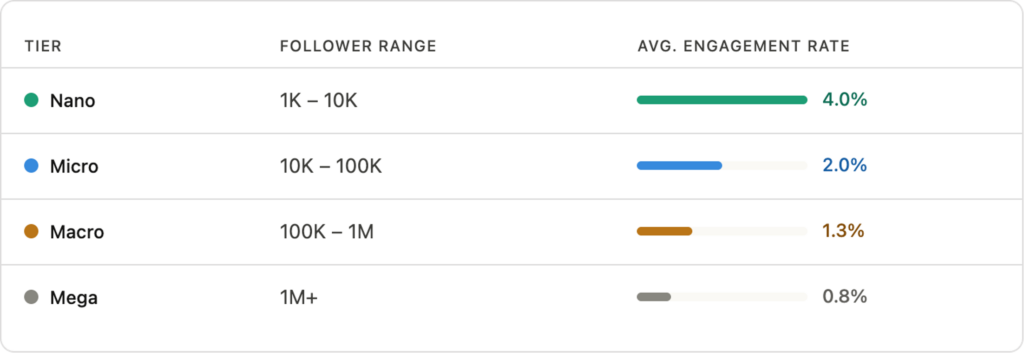
Influencers are generally grouped into four tiers based on follower count. The data is pretty consistent across industries: as follower counts climb, engagement drops.
Yes, you can actually afford this
One of the biggest misconceptions about influencer marketing is cost. The micro and nano tiers — where the best engagement lives anyway — are where the most accessible price points are.
A micro influencer with 25,000 followers might charge $400-$500 per post. In comparison, a mega-influencer with 1 million followers may charge $10,000-$20,000 for a single post.
Long-term partnerships also tend to run less per post than one-off collaborations, making ongoing programs more cost-efficient the longer you invest in them.
You’re buying reach and content
Most marketing channels give you one outcome. Paid ads give you reach. A production shoot gives you content. Influencer marketing gives you both.
Reach into real communities. Even a micro-influencer with 40,000 followers has something most brand channels don’t: a pre-built, trust-based relationship with their audience. When they recommend something, it carries social proof no ad spend can replicate.
Content you can use. An influencer doesn’t just distribute your message, they create it. Authentic photos, videos, testimonials, and reviews that your brand can repurpose across social, email, paid ads, and your website. Many brands see stronger performance from influencer content when it’s repurposed for paid ads versus traditional brand creative. For brands that struggle to produce content at scale, a portfolio of micro-influencer partnerships can fuel weeks of assets, all with real people and real voices behind them.
Niche reach > broad reach
A mega-influencer might reach a million people. But how many of them actually care about your brand?
Micro-influencers give you precision. A B2B software company partnering with a 40,000-follower LinkedIn creator who posts exclusively about operations and workflow gets more qualified eyeballs than a splashy partnership with someone whose audience skews toward lifestyle content. The same holds true for consumer brands or local businesses. A bookstore in Wilmette will see more impact partnering with a local creator who shares North Shore recommendations than with a Chicago influencer whose audience spans the entire city. The reach is smaller, but the audience is closer, more relevant, and more likely to act.
An example: Knauf + Indianapolis Colts
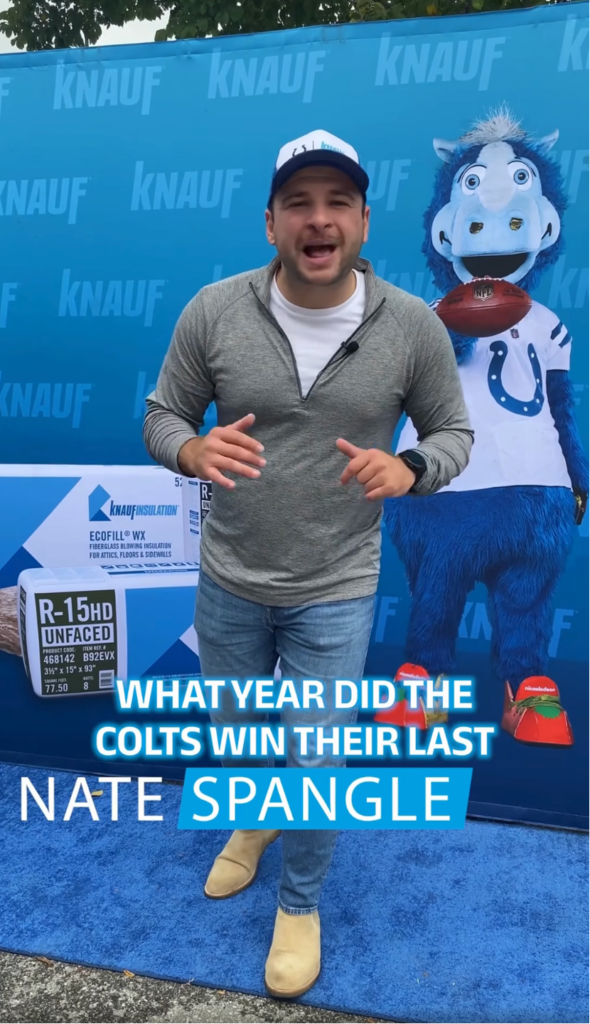
When our client Knauf, a global building materials manufacturer, wanted to amplify its’ Indianapolis Colts sponsorship to a local audience, we identified Nate Spangle — an Indiana-based creator dedicated entirely to celebrating all things Hoosier — as the ideal partner. With 94,000 Instagram followers and a deeply loyal audience of Indiana residents, Nate was a trusted voice in the exact community Knauf wanted to reach.
We built a “Fan on the Street” series where Nate asked fans trivia about the Colts and Knauf at home games. It resulted in over 63,000 video views, 2,400 engagements, and a 1,090% increase in video performance. The campaign delivered authentic content that felt native to Nate’s platform, reached the right audience, and extended Knauf’s Colts sponsorship well beyond a logo on a sign.
How to find the right influencers
Start by identifying creators who already talk about your industry, product category, or customer challenges.
Discovery tools like Modash, Upfluence, or Collabstr can help you filter by engagement rate, audience demographics, location, and follower quality.
Then do the manual review.
- Read the comments. Are people asking questions, sharing experiences, tagging friends? Or is it a graveyard of fire emojis and bot accounts?
- Review consistency. Does the creator post regularly? An influencer who goes quiet for months won’t deliver the sustained presence your brand needs.
- Assess brand fit. Scroll back six months. Are they partnering with brands that feel complementary to yours? Have they taken deals that feel off-brand or inauthentic? How a creator treats other partnerships tells you a lot about how they’ll treat yours.
Let creators do their job
Once you’ve found the right partner, resist the urge to over-script. Provide a clear brief with your key message, goals, and any requirements. Then get out of the way. The reason their audience trusts them is because of their voice — not yours. A post that reads like a press release wastes everyone’s time and budget.
The bottom line
Influencer marketing is no longer a tactic reserved for consumer brands with splashy budgets and celebrity networks. Micro-influencers have leveled the playing field, giving brands of every size access to highly engaged audiences at a price point that makes business sense.
With influencer marketing, you get the reach, the content, and the credibility that only comes from a real person recommending something they believe in.
The brands seeing results are the ones who do the work to find the right voice — and then trust them to tell the story.
Ready to explore what a micro-influencer program could look like for your brand? Contact us to get started.